From Trapped Founder to Liberated CEO: What It Really Takes to Build a Business That Runs Without You
There comes a point in every founder’s journey when the very thing that made the business successful becomes the thing holding it back.
For me, that point came when I realized I was no longer leading a company; I was carrying one.
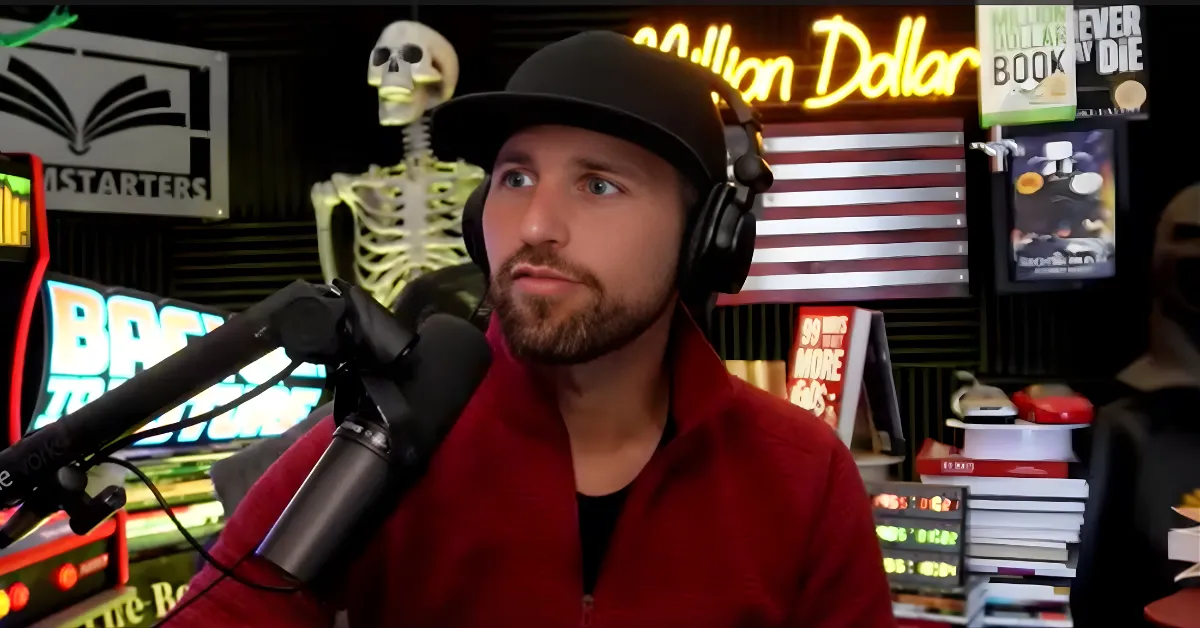
That was a big part of what I unpacked in my interview on Mike Fallat’s Podcast, where we talked about the deeper message behind my book, The Liberated CEO: The Business That Runs Without You. The conversation covered everything from burnout and culture to identity, systems, and the hard truth that what gets you started often will not get you scaled.
The founder’s first badge of honor
In the beginning, hard work feels like the answer to everything.
You stay up late. You answer every call. You solve every problem. You become the source code for the business. And for a while, that works. In fact, that level of ownership is often what gets the company off the ground.
That was my story too.
When I was building my company in the Cayman Islands, I wore my work ethic like a badge of honor. I handled estimates, clients, billing, operations, decisions, and whatever else needed solving. I poured myself into every part of the business because that was the standard I knew how to live by.
But then the company grew.
And eventually, I hit the point where the same behavior that had created momentum started creating bottlenecks. I was still trying to operate like the business was a one-man show, but the reality had changed. We needed more arms than one person could control.
That is where many founders get trapped.
The hero trap
One of the most important ideas we discussed on the podcast was what I call the hero trap.
The hero trap is what happens when the founder becomes too central to every decision, every client interaction, every answer, every move. At first, it feels productive. It feels important. It even feels noble.
But it is a trap.
Because when you become the hero in every scene, you accidentally teach your team that they cannot move without you. They stop owning. They stop thinking independently. They stop developing judgment because they are always waiting for your approval.
Then one day you wake up and realize your business depends on your nervous system to function.
That is not leadership. That is dependency.
Real leadership is not about being the hero. It is about building people, systems, and culture strong enough to carry the mission without you standing in the middle of it.
What freedom in business actually looks like
People hear the phrase “the business that runs without you” and sometimes assume it means absence, detachment, or disengagement.
That is not what I mean at all.
Freedom in business does not mean you stop caring. It means you stop being the only one capable of caring effectively.
For me, one of the most rewarding moments in this whole transformation was sitting in a meeting that I did not run. My team led it. They presented the estimate. They answered the client’s questions. They owned the relationship. I did not need to rescue anything.
And the client did not lose confidence because I stepped back.
In fact, the opposite happened. They saw the strength of the team.
That became my new badge of honor.
Not being needed in every room, but building a company full of people who could lead the room well.
Culture is the real multiplier
Another major theme in the episode was culture, and I believe this is one of the most misunderstood parts of scaling a company.
A lot of people talk about hiring talent. I care about talent, but I care even more about fit.
If someone is highly skilled but does not fit the culture, they become expensive friction. They may perform as an individual, but they will never strengthen the organization.
At Encompass, culture is not a slogan. It is the strongest part of the company.
We value collaboration, ownership, humility, trust, growth, and accountability. We want people who can raise their hand quickly, own mistakes, learn fast, and move forward without excuses. That kind of culture creates safety without lowering standards.
You can have high standards and still build a healthy company.
In fact, I would argue that is the only way to build one that lasts.
What got you here will not get you there
This is one of the great paradoxes of entrepreneurship.
The intensity, grit, and control that help you build the first version of the company can become liabilities if you carry them unchanged into the next phase.
The next level of leadership requires a different version of the leader.
You have to move from doing to designing.
From solving to thinking.
From controlling to coaching.
From reacting to building.
That shift is not just operational. It is deeply personal.
You cannot build a liberated company with an unliberated identity.
That is why this message is about more than systems. Systems matter, absolutely. But the founder’s identity always sets the ceiling. If the leader cannot let go, trust others, regulate pressure, and build culture, no process chart will save the company.
AI, systems, and the future
Mike and I also talked about AI and where it fits into all of this.
I believe AI will continue to shape business and construction in a major way. We are already using it to review documents, interpret code requirements, and support parts of our workflow. It is a powerful tool.
But tools do not replace leadership.
A chainsaw is faster than a hatchet, but it still matters who is holding it.
AI can help you move faster, but if your culture is weak, your communication is poor, or your leadership is reactive, speed will only magnify the dysfunction.
Technology is a multiplier. It does not fix broken foundations.
The deeper question
If there is one deeper question underneath this entire conversation, it is this:
Are you building a business that expands your life, or one that consumes it?
That question matters more than revenue. More than growth charts. More than image.
Because if success costs your peace, your family, your health, or your identity, then the structure may look impressive from the outside, but something underneath is cracking.
The liberated CEO is not a person who checks out. It is a person who builds intentionally, leads clearly, and creates a company that can carry weight without collapsing on the founder.
That kind of business is possible.
But it starts with honesty. It starts with identity. And it starts with the willingness to stop being the hero long enough to become the leader.
If this conversation resonated with you, and you’re ready to stop being the bottleneck in your business…
Get a copy of The Liberated CEO: The Business That Runs Without You.
It’s a practical guide to building systems, developing leaders, and creating a company that can grow without depending on you for everything.
👉 Get the book here:
https://www.amazon.com/dp/B0FRTJ6MWK